
The Sublime in a Wardrobe Malfunction
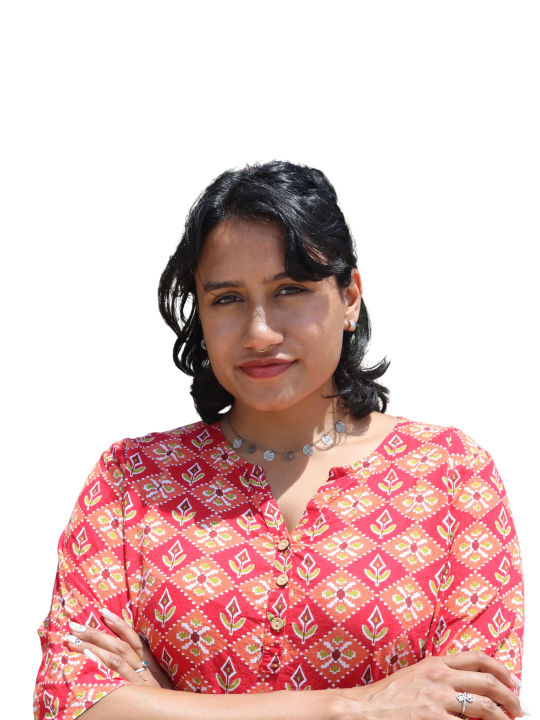
I was facilitating a Chiya Chautari session as a part of the Daayitwa Nepal Public Policy Fellowship, and that day I had a little wardrobe malfunction. Throughout the day a couple coworkers quietly fixed it without any awkward exchange or making a spectacle out of it. Although for my lovely colleagues, it might have just been a subtle display of girlhood and solidarity, those moments stayed with me for a very long time Sara Pyakurel,7th July,2026,
It is not always very obvious what mundane moments in life end up making you feel like you belong in a space. As of recently, for me, it was a wardrobe malfunction.
I was facilitating a Chiya Chautari session as a part of the Daayitwa Nepal Public Policy Fellowship, and that day I had a little wardrobe malfunction. Throughout the day a couple coworkers quietly fixed it without any awkward exchange or making a spectacle out of it. Although for my lovely colleagues, it might have just been a subtle display of girlhood and solidarity, those moments stayed with me for a very long time.
That was perhaps because they revealed something much larger than a wardrobe malfunction to me. They revealed what it feels like to occupy a space where your presence does not have to be negotiated. Let me elaborate, after spending the last eight years in Germany, I had almost forgotten what that kind of ease and comfort feels like without even being aware of what it was that I was missing.
I left Nepal when I was nineteen and like many people who migrate, I learned that belonging is rarely automatic. It is something you assemble by constantly learning and relearning the codes of new spaces while simultaneously being reminded that you are not entirely from there. Sometimes these reminders of your foreignness are explicit (which some Germans can be brilliant at giving you) but you find ways to shield yourself against that exclusion by ascribing it to bigotry of the person inflicting it on you or larger structures that historically created the power relations that exist today resulting in various forms of exclusion. However, it is the fatigue that you accumulate from the more subtle exclusions that I want to address here. Although migration is part and parcel of our globalised world, there is an invisible labour involved in simply existing as an immigrant from the global south, especially in workplaces where you find yourself constantly working relatively hard to prove your competence, explaining yourself, translating your experiences, navigating assumptions before genuine connections can even begin. This experience is far from homogenous for different individuals based on their space of origin, gender, class, race and so on but the foreignness assigned to you (which is inevitable and also not always malicious), quietly shapes how others see you no matter how long you have lived there. You may become deserving of respect, but not always of effortless solidarity.
Returning to Nepal after almost a decade away came with its own contradictions. I had imagined "coming home" as a simple reversal of leaving. What I actually found myself inhabiting is what the sociologist Alfred Schutz calls the position of both the stranger and the homecomer. Home has changed and so have I. Familiar streets feel unfamiliar and I carry habits and perspectives shaped elsewhere. I belong yet I also have to relearn how to belong.
When I joined the Daayitwa Public Policy Fellowship, I expected to reconnect with Nepal's public institutions and the policy realm. What I did not expect was that the fellowship would also become a bridge back into Nepal itself.
Working on my research has allowed me to engage with policy questions that affect people's everyday lives and learn from experts in our field. But equally transformative has been the ordinary rhythms of office life. The lunches that revolve around dal bhat instead of everyone munching on their sandwiches in a corner feel like a gentle reminder to stay grateful to how much privilege I hold in Nepal. The affectionate nagging from Manju didi to eat more stands in contrast to the years in my life I've spent working in high-pressure gastronomy jobs without decent breaks let alone a hearty meal. These moments have been crucial to me in that they’ve illuminated me on how it is these social interactions that heighten my sense of belonging rather than the imagined national boundary that is Nepal.
My sense of home has expanded as Germany remains part of who I am. The friendships, communities, and everyday routines I built there continue to shape me. Simultaneously, Nepal is no longer simply the place I left behind but the place I am actively learning to inhabit again. Home used to be a singular place growing up but as I navigate a life which has required me to move continents constantly, it has become relational and constantly reconstructed through the people who have made space for me.
Ironically, it was within this fellowship that I experienced one of the strongest feelings of ease I have known in years. I hesitate to reduce this entirely to gender, yet I cannot ignore the significance of entering a workplace where women constitute much of the team. There has been an immediacy to interpersonal care that requires neither performance nor justification. The heavy feeling of being an outsider waiting for approval to participate did not even last a day for me here. Professionalism and warmth exist simultaneously and vulnerability is met with care instead of discomfort. Due to my experiences here, I have realised that belonging is not created by abstract ideas of home or national identity but through ordinary acts that have removed the burden of constantly negotiating one's place in a social environment.
The wardrobe malfunction thus has become a metaphor for something much larger.
We often speak about policy in terms of systems, institutions, and legislation. Yet institutions are also built through everyday cultures of care. A workplace where everyone is afforded that care is one where people are first recognised as people. Surely, Nepal is far from homogenous and there is a set of people that face structural exclusion within most spaces. I recognize that the identities I hold here allow me far less suspicion than say a person holding other sets of minority statuses. My intention is far from a nativist plea for everyone to remain where they are to feel the optimum sense of belonging but as we navigate an increasingly interconnected world, we should reflect on whether we are affording gentleness to those who are the most thirsty for it. After eight years abroad, I did not simply return to Nepal. Through this fellowship, I found new ways of arriving into my work, into a community, and, unexpectedly, into a renewed understanding of home and this was mostly owing to the kindness of the people around me.
Perhaps that is the most meaningful bridge this fellowship has offered me: not only between research and policymaking, but between the many versions of myself that have existed across different places. In learning to contribute to Nepal's public institutions, I have also begun learning how to belong here again.